How to Clean Artificial Turf: The Complete Guide for Homeowners
By Drew RockmorePublished May 2, 2026Updated October 7, 2026
People call artificial turf “no maintenance.” I’ve been installing it for over 20 years and I’ve never once described it that way. Low maintenance, yes. Zero maintenance, no. There’s a difference, and your nose will eventually explain it to you if you skip cleaning long enough.
The good news is that knowing how to clean artificial turf is genuinely simple once you have a routine. We’re talking 15-20 minutes a week, not an afternoon. In Houston, where the heat is relentless and pollen season arrives like an uninvited relative who stays for two months, a basic cleaning habit keeps your turf looking and smelling like it did the day it went in.
Here’s everything you need to know.
Why Cleaning Your Artificial Turf Actually Matters
Artificial turf doesn’t grow, doesn’t decompose, and doesn’t need water to survive. But the infill layer beneath the fibers, typically silica sand or crumb rubber, traps everything that lands in it: pet urine, bacteria, pollen, dust, decomposing leaves, the occasional dropped hot dog.
Leave that buildup long enough and you get:
Persistent odors that no amount of hosing will fix once bacteria colonize the infill
Flattened, matted fibers that won’t brush back up because the infill underneath has compacted
Drainage problems when blocked backing perforations turn your lawn into a shallow pond after rain
A turf that looks five years older than it is
Here is my honest take after fixing hundreds of these situations: most “my turf smells terrible” calls are maintenance problems, not product problems. The turf itself is usually fine. The infill is what went wrong. And by the time it smells bad enough to call someone, you’re well past the point where a garden hose fixes it.
A consistent cleaning routine prevents all of this. It takes far less effort than maintaining natural grass — and considerably less effort than explaining to your neighbors why your yard smells like a locker room. (I’ve seen both. The cleaning routine is better.)
What You Will Need
Nothing exotic here. Most of this is already in your garage:
Stiff-bristle broom or turf brush with synthetic bristles only (never metal)
Leaf blower for quick debris passes
Garden hose with an adjustable nozzle
Enzyme-based turf cleaner for pet areas and odor control
Mild dish soap or turf-safe detergent for stains
Pooper scooper if you have dogs (you know who you are)
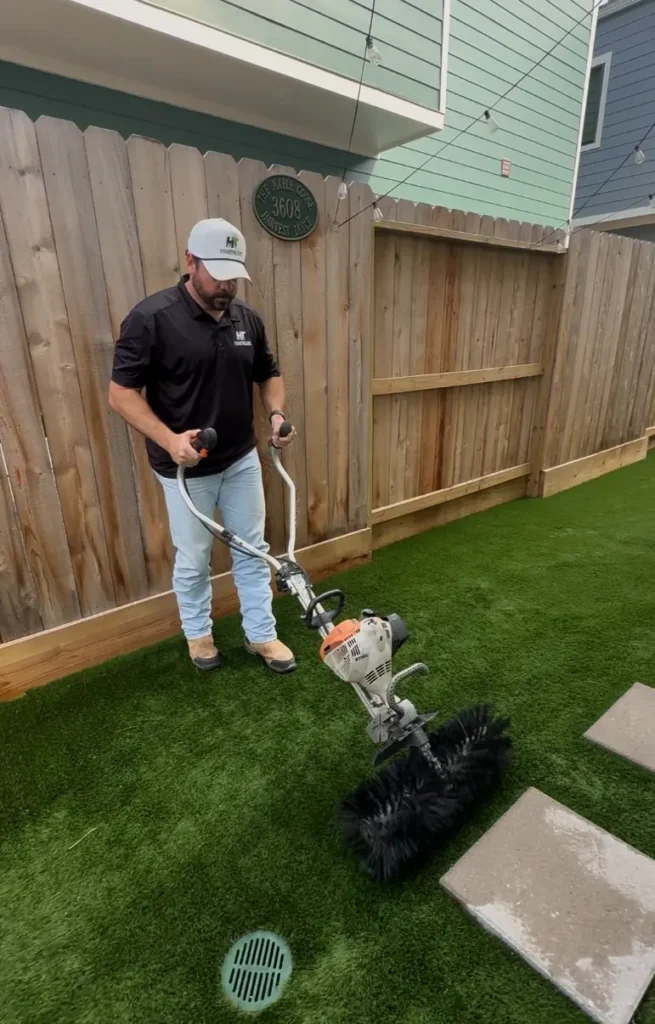
One optional upgrade worth knowing about: a power broom. For lawns over 500 square feet, it does in 10 minutes what a hand brush does in 45. It lifts compacted fibers, redistributes infill, and refreshes the surface in a way a hand brush simply cannot match. Not essential for a small install, but for a large backyard with a couple of dogs, it earns its place quickly.
The Weekly Routine
For most residential lawns, a weekly light pass is enough to keep things fresh. This is the routine that prevents problems rather than fixes them, which is always the better situation to be in.
Step 1: Clear debris first
Use a leaf blower or stiff broom to remove leaves, twigs, dirt, and anything loose from the surface. Do this before any wet cleaning. Rinsing debris into the infill layer compacts it deeper and makes it significantly harder to remove later.
This is the most commonly skipped step. It is also the one that saves you the most trouble down the road. (I’ll stop lecturing. But I’ve seen what happens when people skip it for a year.)
One thing most homeowners never think about: run a quick check for metal objects while you’re out there. Nails, screws, staples, and small hardware can work their way into turf over time, especially in yards near any construction activity or with regular foot traffic from work boots. They’re invisible once they settle into the fibers, and bare feet find them in the least convenient way possible. A magnetic sweeper on a stick (the kind you can find at any hardware store.) takes two minutes and removes the guesswork.
Step 2: Rinse the surface
A thorough rinse with a garden hose removes dust, pollen, and surface dirt. Focus on high-traffic areas and anywhere pets use the lawn. Use a medium pressure fan spray setting. Avoid pointing a high-pressure stream directly at the fibers, as this displaces infill over time.
In Houston, weekly rinsing from March through May is worth doing without fail. Pollen here does not mess around.
Step 3: Handle pet areas
If you have dogs, rinse their go-to spots after each use if you can manage it, or at minimum during each weekly clean. This dilutes urine before it saturates the infill.
For odor that survives a basic rinse, apply an enzyme-based cleaner to those areas and allow it to dwell for the time specified on the label before rinsing. Enzyme cleaners break down the organic compounds causing the smell rather than masking them. This is the actual fix, not the temporary one.
Quick note on pet smell and turf: if your artificial turf installation was done correctly with proper drainage underneath, odor should be manageable with routine cleaning. Persistent smell that nothing touches is usually a drainage problem underneath the turf, not a surface problem. That’s a different conversation but it’s worth knowing so you’re not cleaning indefinitely trying to solve something that started below ground.
Step 4: Brush fibers upright
After rinsing, use a stiff-bristle broom to brush the fibers back to their upright position. Brush against the natural lean of the blades, not with them. Focus on high-traffic areas where fibers flatten most consistently.
Monthly Deep Clean
Once a month, take the routine a step further.
Apply a turf-safe cleaner across the full surface. For lawns with pets or kids, an antimicrobial rinse addresses bacteria that weekly hosing alone does not fully clear. Apply when the turf is cool and shaded. In Houston summers, turf surface temperatures can exceed 150 degrees Fahrenheit by midday, which reduces the effectiveness of enzyme-based products significantly. Early morning or after 6 PM is the window to aim for.
Check and redistribute infill. Pull a few blades back and look at the infill layer beneath. It should sit consistently across the surface and allow blades to stand with support at the base. If it looks thin, compacted, or uneven, redistribute it with a broom. Healthy infill is what keeps fibers upright and gives the surface its cushion underfoot.
Check drainage. Pour a bucket of water on a flat section and watch how quickly it disappears. Good turf drains fast. If water pools or drains slowly, the infill or backing needs attention. In Houston, where a single afternoon storm can dump two inches of rain, drainage that works properly is not optional.
Quarterly Maintenance
Three to four times a year, do a proper deep clean of the full surface.
This means:
A full power brush or mechanical grooming pass across the entire lawn
A complete antimicrobial or enzyme treatment, left to dwell before rinsing
Checking infill depth across the whole surface and topping up where needed
Inspecting seams, edges, and any areas showing unusual wear or lifting
One thing specific to Houston worth adding here: hard water and mineral deposits. Houston’s water supply has high mineral content, and over time calcium buildup and hard water staining accumulates on turf fibers, dulling the color and gradually clogging drainage. It looks like a faint white or grey film on the blades and is easy to miss until it has built up significantly. A proper quarterly clean with a surface power wash addresses this. A garden hose alone does not.
For lawns that have not had a professional clean in a while, a professional service can address contamination levels in the infill that DIY methods cannot reach. Worth considering every year or two, particularly for pet-heavy installs. The difference is the equipment: a commercial extraction machine simultaneously brushes, vacuums, and sprays a treatment solution deep into the turf, pulling urine, dirt, and embedded grime out from below the surface in a way no garden hose or hand brush can replicate. Consider it the equivalent of getting your carpets steam cleaned, you can vacuum every week and still benefit from a proper deep clean periodically.
If your turf is overdue, Houston Turf’s professional cleaning service covers everything from a basic refresh to a full odor-elimination restore, with pricing from $280 based on square footage.
How to Remove Common Stains
Most stains are manageable if you act quickly. The longer something sits, the harder the conversation becomes.
Food and drink spills: Blot up as much as possible with a cloth or paper towel. Do not rub — this pushes the stain deeper into the fibers. Mix mild dish soap with warm water, apply with a soft brush, scrub gently, and rinse thoroughly.
Pet waste (solid): Remove with a pooper scooper or waste bag. Rinse the area, apply an enzyme cleaner, allow it to dwell, then rinse again.
Chewing gum: Apply ice to harden it, then remove carefully with a plastic scraper. Never use metal tools on turf fibers.
Oil or grease: Blot with an absorbent cloth first. Apply a small amount of mineral spirits to a cloth and dab the stain carefully. Follow with soap and water and rinse thoroughly. Test mineral spirits on a small hidden area first before applying to a visible spot.
Paint: If still wet, rinse immediately with water. Dried paint is a significantly harder problem and may need a specialist.
What to Avoid
A few cleaning mistakes come up consistently enough that they are worth calling out directly:
Bleach and ammonia-based cleaners. Bleach degrades turf fibers, fades the color, and damages the backing. Ammonia-based cleaners worsen urine odors by reacting with the uric acid already present. Neither belongs anywhere near artificial turf.
High-pressure washing. Pressure above 1,500 PSI displaces infill, damages the backing, and can loosen the turf from its base. If you use a pressure washer, keep it low and use a wide fan tip.
Metal rakes or wire brushes. These snag and scratch synthetic fibers. Always use synthetic bristle brushes or purpose-made turf rakes.
Cleaning in direct midday sun. Houston summer turf surface temperatures can reach 150 to 180 degrees Fahrenheit. Cleaning products applied to a superheated surface evaporate before they can work. Clean in the morning or evening.
Letting pet areas go. The most common source of permanent odor problems in residential turf is ignoring pet zones for too long. Urine that soaks into infill repeatedly without being diluted or treated will eventually need professional intervention that simple weekly maintenance would have prevented entirely.
Houston-Specific Considerations
Houston homeowners deal with a few conditions that make turf maintenance slightly different from drier or cooler climates:
Humidity and shade. High humidity means organic debris breaks down faster and creates musty odors more quickly. Shaded areas under trees or covered structures are especially prone to this. Clear debris more frequently in those spots.
Pollen season. Houston spring pollen is intense and persistent. Weekly rinsing from March through May is not optional if you want to keep the infill from compacting with a layer of yellow dust.
Heavy rain events. Tropical storms and heavy rain actually help rinse the surface, but they can also compact infill and push sand toward low points. After significant rainfall, check for displacement and rebrush if needed.
Year-round use. Unlike homeowners in colder climates who get a natural maintenance break in winter, Houston turf sees 12 months of use. A consistent monthly routine matters more here than in seasonal climates. There is no “it’ll be fine until spring” in Houston.
If you want to understand more about how artificial turf installation in Houston affects long-term maintenance requirements, that is worth reading before you get into your first year of ownership.
Cleaning Schedule at a Glance
Frequency
Task
Weekly
Clear debris, rinse surface, treat pet areas, brush fibers upright
Monthly
Full surface cleaner application, infill check, drainage check
Quarterly
Deep clean, power brush, infill top-up, seam and edge inspection
How often should you clean artificial turf? For most residential lawns, a weekly rinse and debris clear is sufficient. Pet areas should be rinsed after each use if possible. A deeper clean with an enzyme-based cleaner should happen monthly, and a full deep clean quarterly.
Can you use bleach to clean artificial turf? No. Bleach degrades turf fibers, fades the color, and damages the backing over time. Use an enzyme-based cleaner for odors and bacteria, and mild dish soap for stains.
How do you get pet odor out of artificial turf? Rinse the area thoroughly first to dilute urine, then apply an enzyme-based turf cleaner and allow it to dwell before a final rinse. Enzyme cleaners break down the organic compounds causing the odor rather than masking them. Persistent odor that survives this treatment usually means the infill is saturated and needs professional attention.
Can you pressure wash artificial turf? With caution. Keep pressure below 1,500 PSI and use a wide fan tip. High pressure displaces infill and can damage the turf backing. A garden hose on medium pressure is sufficient for routine cleaning.
Why does my artificial turf smell bad? Persistent odor almost always means bacteria have colonized the infill layer, usually from pet urine that was not rinsed out consistently. Surface rinsing alone will not fix it at that stage. An enzyme-based deep clean or professional turf cleaning is the next step.
Artificial turf is a long-term investment, and like any investment it performs best when you take care of it. The routine above takes less time than mowing natural grass ever did, and considerably less time than replacing turf that wore out early because the maintenance was skipped.
If you have questions about your specific install, want a professional clean, or just want to talk through what you’re dealing with, contact Houston Turf for a free assessment. We’ll also probably make a terrible joke. It comes with the turf.
In this article
Need help with your turf?
Installs, putting greens, and turf cleaning across Houston. Free, no obligation quotes.